
Co-Founder & CTO, SnapMenuAI, Inc


Phone orders are still valuable business for many restaurants.
The problem is that customers often call at the exact time restaurant staff have the least attention to spare.
Lunch starts.
Dinner gets busy.
Pickup orders begin stacking up.
Guests need help.
Payments need to be taken.
The kitchen needs answers.
Then the phone starts ringing.
Someone has to decide whether to stop what they are doing and answer it.
That is why restaurants can miss phone orders even when customer demand is strong.
The issue is usually not that customers stopped calling.
It is that the restaurant has more work happening at the same time than the team can comfortably handle.
Why do restaurants miss phone orders during busy hours?
Restaurants often miss phone orders because answering the phone competes with other immediate responsibilities.
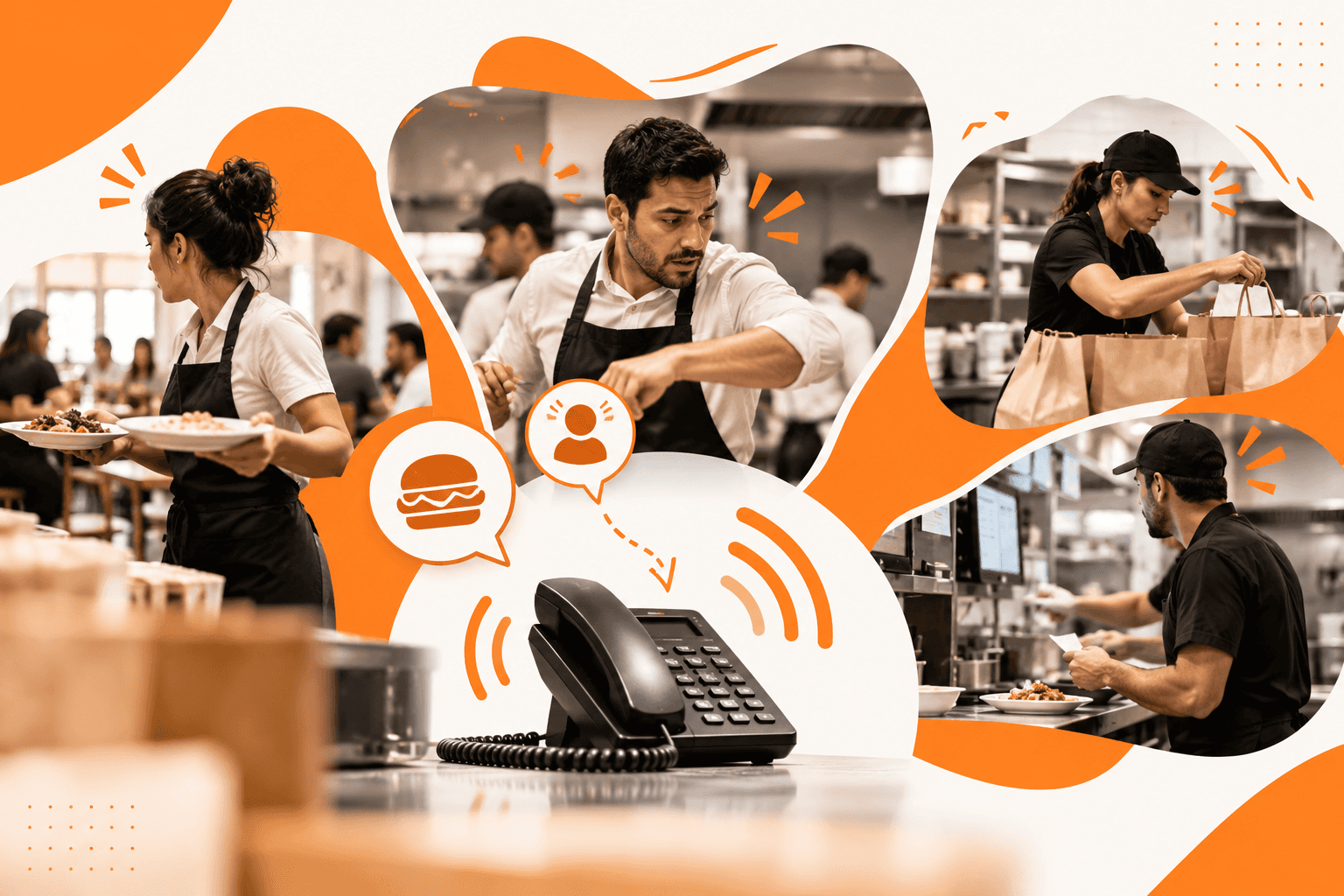
When a restaurant gets busy, staff may already be serving guests, taking payments, preparing pickup orders, helping delivery drivers, checking orders, and communicating with the kitchen.
The phone becomes one more job competing for the same employee's attention.
If nobody is available, the call may ring longer, go unanswered, or reach a customer who has already decided not to wait.
That can mean a phone order never reaches the restaurant.
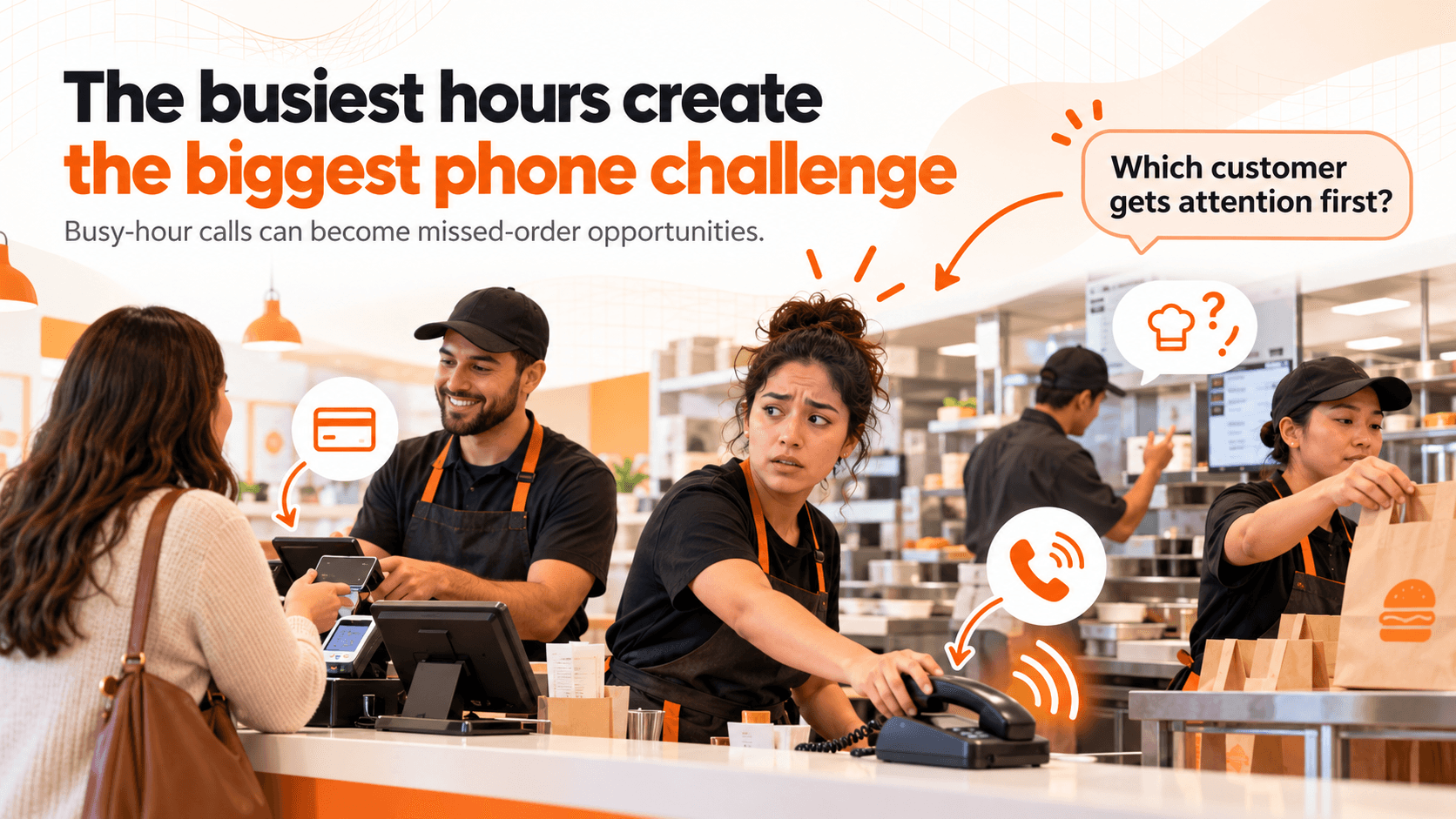
The busiest hours create the biggest phone challenge
Restaurants do not usually struggle with one phone call during a quiet period.
The challenge appears when several things happen at once.
An employee may be helping a guest when the phone rings.
Another team member may already be handling pickup orders.
Someone else may be taking payments.
The kitchen may need clarification on an existing order.
The phone still needs an answer.
For restaurant owners, this creates a simple problem:
Which customer gets attention first?
The customer standing at the counter cannot be ignored.
Neither can the guest waiting for a payment.
But the person calling may also be ready to place an order.
That is how busy-hour phone calls can become missed-order opportunities.
Manual phone answering takes staff away from other work
Taking a restaurant phone order involves more than saying hello.
Someone needs to listen to the customer, answer questions, follow menu choices, capture changes, confirm details, and make sure the order reaches the restaurant correctly.
Even a straightforward call takes time and attention.
During a rush, that attention has to come from somewhere.
The employee answering the phone may have to stop helping another customer or pause another task.
That interruption may seem small once.
Repeated throughout a busy shift, it adds up.
This is one reason restaurants are looking beyond traditional AI phone answering and evaluating systems that can help customers complete more of the ordering process.

Several calls can arrive at the same time
Restaurant phone traffic does not arrive in a perfect line.
Customers often call around the same meal periods.
That means several calls may arrive within a short period.
A restaurant may be able to answer one.
But what happens when another customer calls while that employee is still on the phone?
Then another?
Some callers may be placed on hold.
Others may hear the phone continue ringing.
Some may call back.
Some may simply move on.
Restaurant owners should look closely at when missed calls happen.
If most unanswered calls happen during the same busy periods, the problem may be less about customer demand and more about phone capacity during peak hours.
Phone calls are not always simple orders
Another reason restaurant calls take time is that customers do not always know exactly what they want before they call.
They may ask about:
Menu choices
Availability
Pickup timing
Delivery
Pricing
Restaurant hours
Reservations
Order changes
Special requests
A short question may turn into an order.
An order may turn into several questions.
That means employees cannot always predict how long the next phone call will take.
A restaurant with detailed menu choices may feel this even more strongly. Our guide to Voice AI for complex restaurant phone orders looks more closely at what happens when calls include multiple choices and changes.
Putting customers on hold does not remove the problem
When staff are busy, putting a caller on hold may seem like the easiest option.
But the order still has to be taken.
The customer is simply waiting for someone to become available.
If the wait becomes too long, the caller may hang up.
Even when they stay on the line, an employee still needs to return to the call and complete the conversation.
For the restaurant, the work has not disappeared.
It has only been delayed.
That is why owners should think beyond answering the phone and look at the full AI phone ordering process.
The real goal is not just getting the call answered.
It is helping the customer complete what they called to do.
Staff may rush calls when the restaurant is under pressure
A missed order does not always begin with an unanswered phone.
Sometimes the call gets answered, but the employee is already trying to do several things at once.
That can lead to a rushed conversation.
The employee may be watching the counter while listening to the caller.
They may be waiting for another customer to pay.
They may be trying to answer a question from the kitchen at the same time.
That creates more opportunity for details to be repeated, misunderstood, or missed.
For restaurant owners, the problem is not the employee.
It is the workload.
If someone has to divide their attention between the phone and the restaurant around them, both experiences can become harder.
Menu complexity can make phone calls longer
The more choices customers have, the more attention a phone order may require.
Restaurant menus can include sizes, modifiers, sides, substitutions, extras, required selections, and special instructions.
Staff need to make sure the right choice stays with the right item.
They may also need to explain what is available.
Keeping menu information clear and current helps, which is why restaurant menu management is also connected to the phone-ordering experience.
A restaurant phone system should work from accurate menu information rather than creating another place for staff to maintain conflicting details.
Missed phone orders are often a capacity problem
Restaurant owners sometimes think about missed calls as a phone problem.
Often, they are really a capacity problem.
Customers are calling.
The restaurant may have demand.
But the team does not always have someone available at the exact moment that customer wants to order.
Hiring another employee only to answer occasional rush-hour calls may not make sense for every restaurant.
Asking existing employees to keep stopping what they are doing may not solve the problem either.
The real question becomes:
How can the restaurant handle more incoming orders without adding more pressure to the busiest part of the shift?
That is where restaurant phone automation can become useful.
AI phone ordering can help handle routine ordering calls
AI phone ordering for restaurants is designed to help with the calls that normally require staff attention.
Depending on the restaurant setup, a phone ordering system can help answer customer calls, take orders, follow configured menu choices, handle supported changes, answer common questions, confirm order details, and bring restaurant staff into the call when needed.
The goal is not to stop staff from speaking with customers.
It is to reduce the number of routine calls that require an employee to manually handle every step.
That can be especially useful during the hours when staff attention is already stretched.
The goal is not fewer calls. It is fewer missed opportunities
Restaurant owners should not look at a ringing phone as only an interruption.
A customer is calling for a reason.
They may be ready to order.
They may need one answer before they decide.
They may be trying to reach the restaurant because they are already interested in buying.
The better goal is not:
“How do we stop the phone from ringing?”
It is:
“How do we make sure more customers get help when they call?”
That keeps the focus where it belongs: on the customer and the order.
How can restaurant owners find where phone orders are being missed?
Start by looking at what happens during your busiest hours.
You do not need a complicated study.
Ask a few practical questions:
When does the restaurant receive the most calls?
How often are employees already helping another customer when the phone rings?
How often do callers get placed on hold?
Are there periods when nobody is available to answer?
Which types of calls take staff the most time?
How often are calls mainly routine menu or pickup questions?
What happens when several customers call together?
Does taking phone orders interrupt counter, dining, or pickup service?
These questions help identify whether the problem is call volume, staffing, menu questions, complicated orders, or simply too many things happening at once.
Once the problem is clear, the restaurant can decide what type of phone support would actually help.
What should restaurants look for in a phone ordering system?
Restaurant owners should focus on everyday restaurant work rather than a long list of technical features.
A useful system should be able to handle the calls that commonly pull employees away from other responsibilities.
That includes taking complete orders, understanding the restaurant's menu, following customer changes, answering supported questions, confirming orders, fitting the restaurant's payment process, and bringing staff into the call when necessary.
Restaurants comparing available options can read our guide to the best AI phone ordering systems for restaurants.
The most important test is still your own restaurant.
Use your menu.
Use your busiest call situations.
Then see whether the system actually reduces the work your team is struggling with.
Where Snapmenu VoiceAI fits
Snapmenu VoiceAI helps restaurants handle customer calls and phone orders when staff cannot always get to the phone.
VoiceAI can help answer incoming calls, take orders, work with configured menu choices and modifiers, answer supported menu questions, make relevant recommendations, support reservation requests, send payment links and confirmations, and bring restaurant staff into the conversation when needed.
The restaurant benefit is straightforward:
Customers can still get help with their phone orders while staff stay focused on running the restaurant.
Frequently Asked Questions
Why do restaurants miss phone orders?
Restaurants often miss phone orders because employees are already handling guests, payments, pickup orders, kitchen communication, and other responsibilities when the phone rings. During busy periods, staff may not always be available to answer every call.
When are restaurants most likely to miss calls?
Missed calls are more likely when call demand overlaps with the restaurant's busiest service periods. The exact timing varies by restaurant, so owners should review when their own calls and service demand are highest.
Can missed restaurant calls mean missed orders?
Yes. When a customer calls specifically to place an order and nobody answers, the restaurant may lose that ordering opportunity if the customer does not call back.
Does answering every call solve the problem?
Not always. The caller may still need to ask questions, make menu choices, change the order, confirm details, and complete payment. Restaurants should look at the entire phone-ordering process, not only whether the call was answered.
How can restaurants reduce missed phone orders?
Restaurants can review staffing during peak hours, improve call-handling processes, keep menu information accurate, and consider phone ordering technology that can handle routine customer calls when employees are busy.
Can AI help restaurants take phone orders?
Yes. Depending on the product and restaurant setup, AI phone ordering can help answer calls, take orders, work with menu information, handle supported changes, answer common questions, and involve staff when human assistance is needed.
Busy restaurants should not have to choose between two customers
The customer standing in front of your team needs attention.
So does the customer calling to place an order.
During busy hours, asking one employee to handle both at the same time can create unnecessary pressure.
Restaurant owners should start by identifying when calls are being missed and why.
Then look for a solution that helps the restaurant handle more of those calls without making service harder for staff or customers.
That is the real opportunity behind restaurant phone ordering technology.
Keep more phone orders moving during busy hours
See how Snapmenu VoiceAI can help your restaurant answer customer calls and handle phone orders when your team is already busy.
Stop missing phone orders during your busiest hours